ProfiEnglish article
How flashcards, audio, and visuals can keep vocabulary practice simple
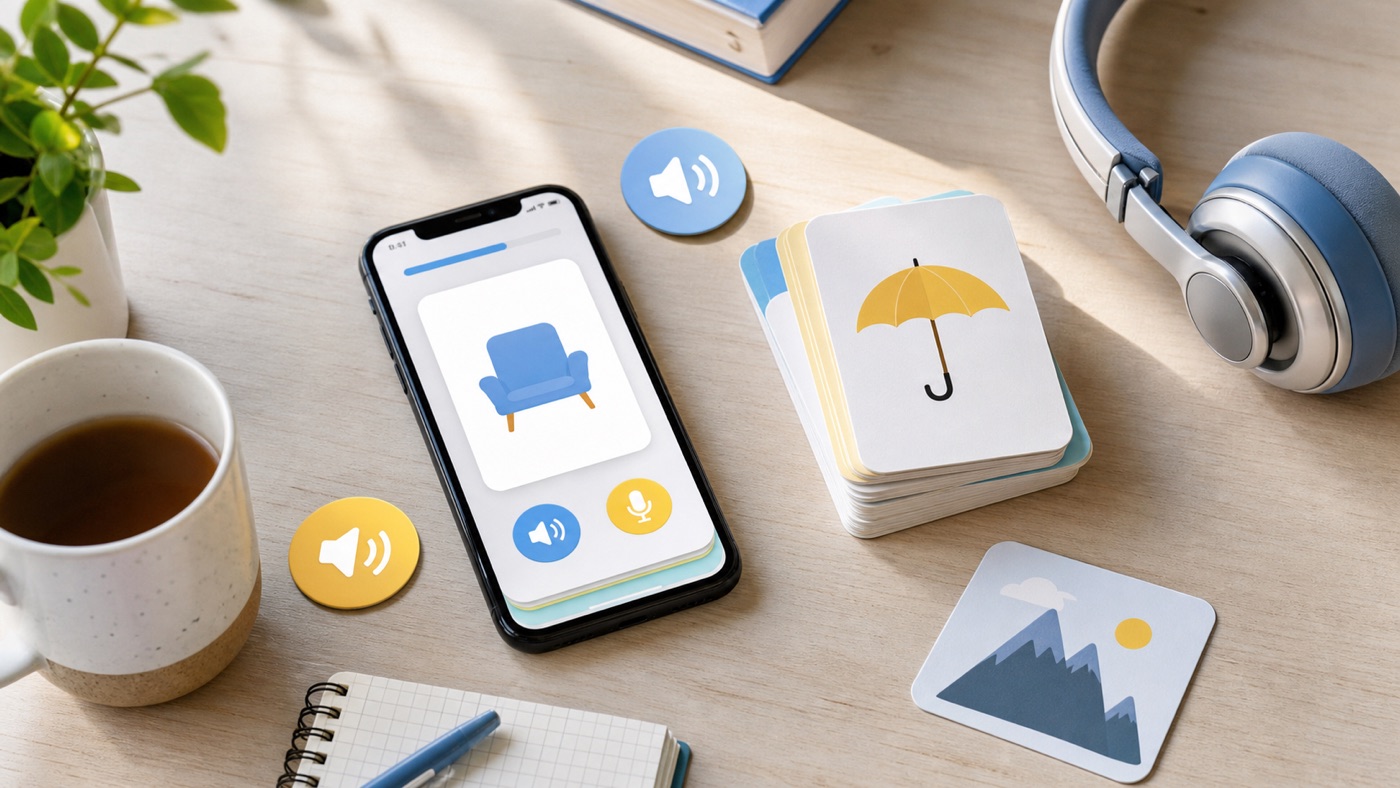
A vocabulary app becomes easier to use when every screen has one job. ProfiEnglish is strongest when it keeps the loop compact: card, image, pronunciation, repeat.
Product note
One card should not become a full lesson page
The app does not need to explain everything at once. A learner should understand the word, hear it, and decide whether to move forward or repeat. That small loop is easier to maintain than a heavy lesson flow.
Product note
Audio makes the card more useful
A word list teaches recognition. Audio adds another layer: the learner can connect spelling with sound. For beginners, that makes the app feel more complete without adding complexity.
Next steps
What to emphasize on the site
- A compact daily study loop.
- Images and pronunciation as memory support.
- Offline-friendly practice for short sessions.
Practice
A practical example
A learner might open the app for three minutes, not for a full lesson. The screen should support that reality: show one clear card, play pronunciation quickly, make the meaning visible, and allow the learner to continue without rebuilding context. This is where flashcards, audio, and illustrations work together. Each element has a job, and none of them should compete for attention.
Practice
How to judge whether the learning loop works
The loop works when users can finish a small session and understand what changed: they reviewed words, heard pronunciation, and know what to repeat next. Useful signals are completed short sessions, return rate, repeated audio plays, and whether users continue after the first few cards. If the app requires too much reading before practice starts, the learning loop is too heavy.
Practice
What to improve next
The next step is to make the first study session more explicit. The app should quickly show what a card means, how audio helps, and why repeating a small set is enough for today. Articles should support that promise with concrete examples instead of broad claims about language learning.
Next
Related project
This article connects back to the app page with the product summary and store links.